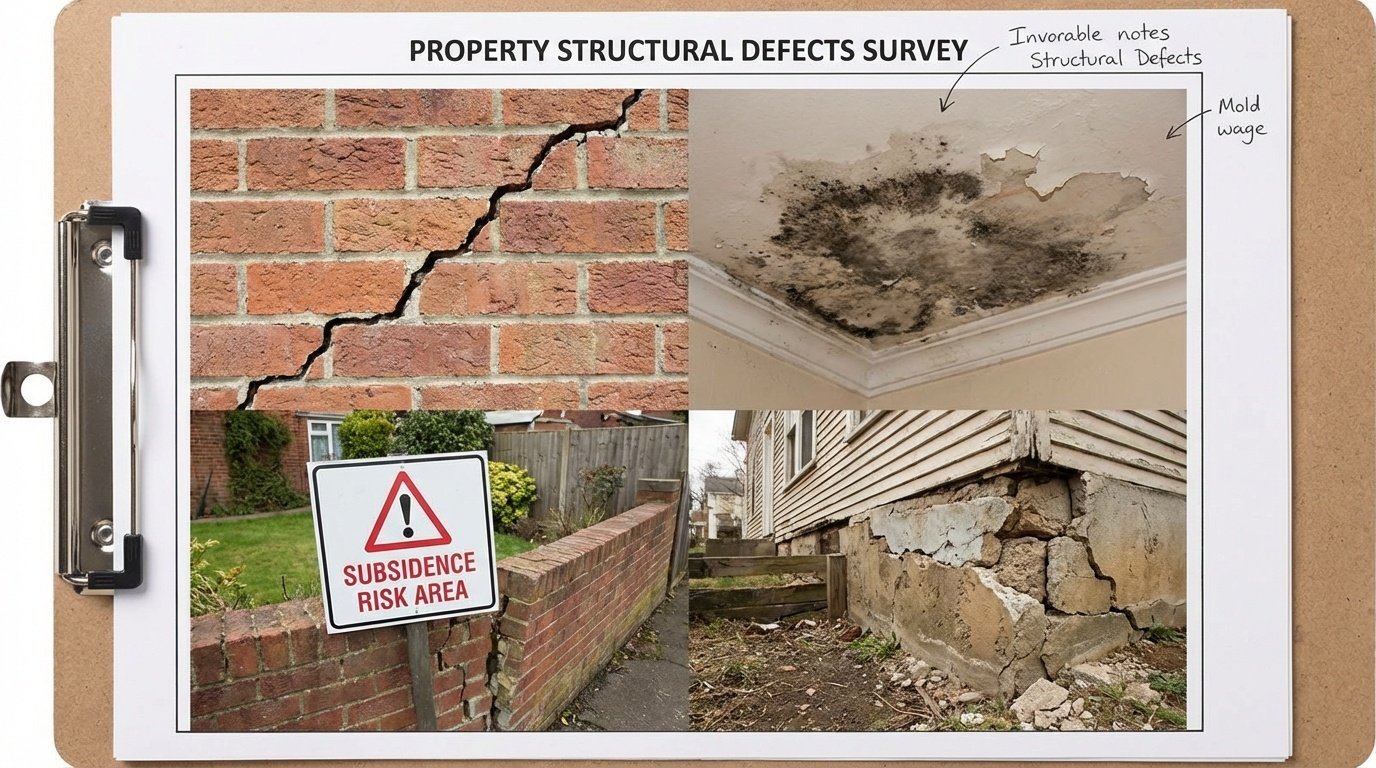
After conducting thousands of property surveys across Tunbridge Wells and Kent, our RICS chartered surveyors have identified recurring defects that affect properties throughout the region. Understanding these common issues helps homebuyers make informed decisions and negotiate effectively. This expert guide reveals the ten most frequent property defects we find during building surveys and homebuyer reports, along with typical repair costs and severity ratings.
1. Damp and Moisture Problems
Damp is unquestionably the most common defect our chartered building surveyors identify in residential property across Kent. The South East's climate combined with aging property stock creates ideal conditions for moisture issues.
Types of Damp We Find
Rising Damp: This occurs when ground moisture rises through walls due to failed or absent damp proof courses. Our surveyors identify rising damp through characteristic tide marks on lower walls, typically extending 1-1.5 meters above floor level. Hygroscopic salts drawn up with moisture create white crystalline deposits on wall surfaces. Properties built before 1875 often lack any damp proofing, while later properties may have failed slate or bitumen DPCs.
Penetrating Damp: Water penetration through external walls, particularly on exposed elevations facing prevailing weather. Solid wall construction common in Victorian and Edwardian properties provides no cavity barrier against rain penetration. Failed pointing between bricks, cracked render, or defective wall ties allow water ingress. Our RICS building surveys identify penetrating damp through moisture meter readings and visual evidence like internal damp patches corresponding to external defects.
Condensation: Modern living in older properties creates condensation problems. Poor ventilation, single glazing, and inadequate heating cause moisture-laden air to condense on cold surfaces. Bathrooms, kitchens, and bedrooms in properties throughout Tunbridge Wells show black mold growth indicating condensation issues. Unlike rising or penetrating damp, condensation affects surfaces rather than penetrating wall structure.
Repair Costs and Solutions
- Damp Proof Course Installation: £40-60 per linear meter (typical terraced house: £2,000-£4,000)
- Repointing Brickwork: £50-80 per square meter
- Improved Ventilation: £200-500 for humidity-controlled extractors
- Tanking Basements: £3,000-£8,000 depending on area
Our chartered surveyors recommend addressing damp promptly. Left untreated, moisture causes secondary problems including timber decay, plaster deterioration, and decorative damage costing significantly more to repair.
2. Subsidence and Structural Movement
Structural movement concerns many homebuyers in Kent. Our RICS chartered surveyors carefully differentiate between historic settlement (common and usually harmless) and ongoing subsidence requiring urgent attention.
Identifying Structural Issues
During building surveys in Tunbridge Wells, we assess crack patterns, locations, and widths. Diagonal cracks wider at the top than bottom, particularly around door and window openings, suggest subsidence. Stepped cracking following mortar joints in brickwork indicates settlement or ground movement. Horizontal cracks often result from expansion or lintel failure rather than subsidence.
Clay soil in parts of Kent causes seasonal ground movement. During dry summers, clay shrinks as moisture evaporates, potentially affecting building foundations. Tree roots near properties exacerbate this issue by extracting moisture from soil. Our chartered building surveyors identify trees whose root systems might affect property foundations, particularly fast-growing species like willow, poplar, and oak within falling distance of buildings.
Severity Assessment
Not all cracks indicate serious problems. Hairline cracks under 1mm wide typically reflect minor thermal movement or historic settlement. Cracks 1-5mm wide merit monitoring but rarely require immediate action. Cracks exceeding 5mm width, particularly if progressive, need structural engineer assessment and potential underpinning.
Repair Costs
- Crack Monitoring: £150-300 (crack gauges installed for 3-12 months)
- Structural Engineer's Report: £400-800
- Minor Repairs (crack stitching): £1,000-£3,000
- Underpinning: £10,000-£50,000+ depending on extent
3. Roof Defects and Deterioration
Roof condition significantly affects property value and liveability. Our surveyors conducting homebuyer reports and building surveys throughout Kent regularly identify aging roof coverings requiring attention or replacement.
Common Roof Problems
Slate and Tile Issues: Natural slate roofs common in period properties throughout Tunbridge Wells last 80-120 years before requiring replacement. "Nail sickness" occurs when iron nails rust, allowing slates to slip. Missing or broken tiles allow water penetration into roof spaces. Our chartered surveyors use binoculars and drone technology to assess roof condition without accessing every roof slope.
Lead Valley Deterioration: Lead valleys between roof slopes split or wear through after 60-80 years. Failed valleys cause significant water penetration affecting ceilings and internal walls. Patching provides temporary relief, but ultimately valley replacement becomes necessary.
Ridge Tile Problems: Mortar bedding under ridge tiles cracks and deteriorates, allowing tile movement and water ingress. High winds lift poorly bedded ridge tiles. Re-bedding ridge tiles is relatively inexpensive preventative maintenance.
Flat Roof Failures: Felt flat roofs common on extensions and rear additions last 10-20 years before failing. Blistering, ponding water, and splitting felt indicate failure. Modern EPDM rubber or GRP fiberglass systems provide longer-lasting alternatives to traditional felt.
Repair Costs
- Complete Roof Replacement (Victorian terraced house): £8,000-£15,000
- Lead Valley Replacement: £800-£1,500 per valley
- Ridge Tile Rebedding: £40-60 per meter
- Flat Roof Replacement (20 sq meters): £2,000-£4,000
- Chimney Repointing: £400-£1,200 per stack
4. Window and Door Failures
Windows and doors suffer considerable wear. Our building surveyors throughout Kent identify various window-related defects during property inspections.
Typical Window Issues
Rotten Timber: Wooden window frames, particularly sills and lower sections, decay through water damage. Original sash windows in period properties often show advanced timber rot requiring extensive repairs. Our chartered surveyors probe suspicious areas with bradawls to assess decay extent.
Failed Double Glazing: Modern double-glazed units "blow" when seals fail, causing condensation between panes. Misty glazing cannot be repaired; entire units need replacement. Properties with double glazing installed 15-25 years ago commonly show failed units throughout.
Sash Window Problems: Traditional sash windows in Victorian properties suffer broken sash cords, stuck mechanisms, and air infiltration. While charming, original sash windows provide poor thermal efficiency and require regular maintenance.
Repair Costs
- Sash Window Overhaul: £400-800 per window
- Replacement Timber Sash Windows: £800-£1,500 per window
- Double Glazing Unit Replacement: £150-300 per window
- uPVC Window Replacement: £300-600 per window
5. Electrical Installation Concerns
Electrical safety is paramount. Our RICS chartered surveyors visually inspect electrical installations during building surveys, recommending specialist testing when concerns arise.
Common Electrical Issues
Outdated wiring systems in properties throughout Tunbridge Wells pose safety risks. Pre-1960s rubber or fabric-insulated wiring requires complete replacement. Fuse boards without RCD (residual current device) protection don't meet current safety standards. Insufficient socket outlets lead to dangerous multi-plug adaptor use. Our chartered building surveyors recommend electrical condition reports for properties with installations over 25 years old.
Typical Costs
- Electrical Condition Report: £150-300
- Complete Rewiring (3-bed house): £4,000-£8,000
- Consumer Unit Replacement: £400-800
6. Drainage and Guttering Defects
Effective water management protects properties from damage. Our surveyors identify guttering and drainage issues that, left unaddressed, cause expensive problems.
Common Drainage Problems
Blocked or Damaged Gutters: Leaves and debris block gutters, causing overflow that saturates walls below. Cast iron gutters in period properties corrode and crack. Plastic guttering becomes brittle and cracks, particularly at joints. Overflowing gutters cause penetrating damp, timber decay, and foundation saturation.
Defective Downpipes: Blocked or damaged downpipes direct rainwater against walls. Missing downpipe sections or incorrect connections to underground drainage cause water accumulation near foundations.
Underground Drainage Issues: Cracked or collapsed drains, tree root ingress, and poor falls cause drainage problems. While our visual building surveys don't include drain testing, we recommend CCTV drainage surveys when concerns exist.
Repair Costs
- Gutter Cleaning: £80-150
- Gutter Replacement (semi-detached house): £600-£1,200
- CCTV Drain Survey: £150-300
- Drain Repairs: £500-£3,000+ depending on extent
7. Timber Decay and Insect Infestation
Timber elements in older properties suffer decay and insect attack. Our RICS building surveys identify rot and infestation requiring treatment.
Types of Timber Problems
Wet Rot: The most common form of timber decay results from sustained moisture exposure. Affected timber becomes soft, spongy, and dark. Window frames, door frames, and suspended floor joists near leaking plumbing commonly show wet rot.
Dry Rot: More serious than wet rot, dry rot spreads through masonry attacking timber throughout buildings. Characteristic mushroom-like fruiting bodies and rust-colored spores indicate active dry rot. Immediate specialist treatment is essential when our chartered surveyors identify dry rot.
Woodworm: Various wood-boring beetles attack structural timber. Small flight holes indicate infestation. Active infestations show fresh bore dust. Our building surveyors recommend specialist timber surveys if significant infestation is suspected.
Treatment Costs
- Timber Specialist Survey: £200-400
- Wet Rot Repairs: £500-£2,000
- Dry Rot Treatment: £1,500-£5,000+
- Woodworm Treatment: £400-£1,200
8. Heating System Issues
Central heating reliability affects comfort and running costs. Our surveyors assess heating systems during property inspections throughout Kent.
Common Heating Problems
Aging boilers approaching end of life concern homebuyers. Boilers typically last 12-15 years before requiring replacement. Inefficient old systems increase energy costs significantly. Inadequate heating systems struggle to warm properties properly. Radiators in poor condition, incorrectly sized for rooms, or poorly positioned reduce heating efficiency.
Upgrade Costs
- New Combination Boiler: £1,800-£3,000
- System Boiler with Cylinder: £2,500-£4,000
- Full Central Heating Installation: £3,000-£6,000
- Radiator Replacement: £150-400 per radiator
9. Poor Previous Repairs and DIY Work
Substandard workmanship creates ongoing problems. Our chartered building surveyors regularly identify poorly executed repairs during surveys in Tunbridge Wells.
Common Bodge Jobs
Cement mortar repairs on lime mortar walls trap moisture, accelerating decay. Incorrect damp proofing using impermeable renders prevents walls breathing naturally. Poorly installed loft insulation blocking ventilation causes condensation problems. Unregulated electrical work poses safety hazards. Structural alterations without building control approval may not meet regulations.
Our building survey reports highlight substandard work, recommending proper remediation. Fixing previous bodges often costs more than correct initial work.
10. External Wall and Pointing Deterioration
External wall condition protects properties from elements. Our surveyors assess brickwork and pointing during building surveys across Kent.
Wall Maintenance Issues
Deteriorated pointing allows water penetration into walls. Crumbling mortar between bricks needs repointing before damage spreads. Cracked or spalling bricks from frost damage or sulfate attack require replacement. Rendered walls develop cracks allowing moisture ingress. Painted brickwork traps moisture if unsuitable paint types are used.
Repair Costs
- Repointing (per square meter): £50-80
- Render Repairs: £40-70 per square meter
- Brick Replacement: £80-120 per square meter
How Our Surveyors Identify These Defects
During RICS building surveys and homebuyer reports throughout Tunbridge Wells, our chartered surveyors use professional equipment and expertise to identify property defects:
- Moisture Meters: Detect damp in walls, floors, and timbers
- Binoculars: Inspect roof details from ground level
- Probes and Bradawls: Test timber for decay
- Spirit Levels: Assess structural alignment
- Thermal Cameras: Identify heat loss and hidden moisture
- Drone Technology: Comprehensive roof inspection
Using Survey Findings in Negotiations
When our building survey reports identify significant defects, homebuyers can:
- Request price reductions reflecting repair costs
- Ask sellers to complete repairs before completion
- Negotiate retention amounts held until works complete
- Withdraw from purchase if defects are too serious
Many homebuyers in Kent successfully negotiate £5,000-£20,000 off purchase prices based on defects identified in our survey reports.
Preventing Future Problems
Our chartered surveyors recommend:
- Regular Maintenance: Annual gutter cleaning, roof inspections, and redecorating prevents minor issues becoming major problems
- Prompt Repairs: Address defects quickly before they cause secondary damage
- Professional Tradespeople: Use qualified contractors understanding proper repair techniques
- Appropriate Materials: Match repair materials to original construction
- Ongoing Monitoring: Watch for early warning signs like new cracks or damp patches
Get Professional Surveying Services
If you're buying property in Tunbridge Wells, Tonbridge, Sevenoaks, or anywhere across Kent, our RICS chartered surveyors identify defects during comprehensive building surveys and homebuyer reports. With extensive experience surveying residential property throughout the region, we provide clear reports detailing issues, repair priorities, and cost estimates.
Contact Tunbridge Wells Surveyors today for your property survey. Our chartered building surveyors help you buy property confidently, understanding exactly what defects exist and what they'll cost to fix.
Need a Property Survey in Kent?
Our RICS chartered surveyors identify defects and provide clear repair cost estimates.