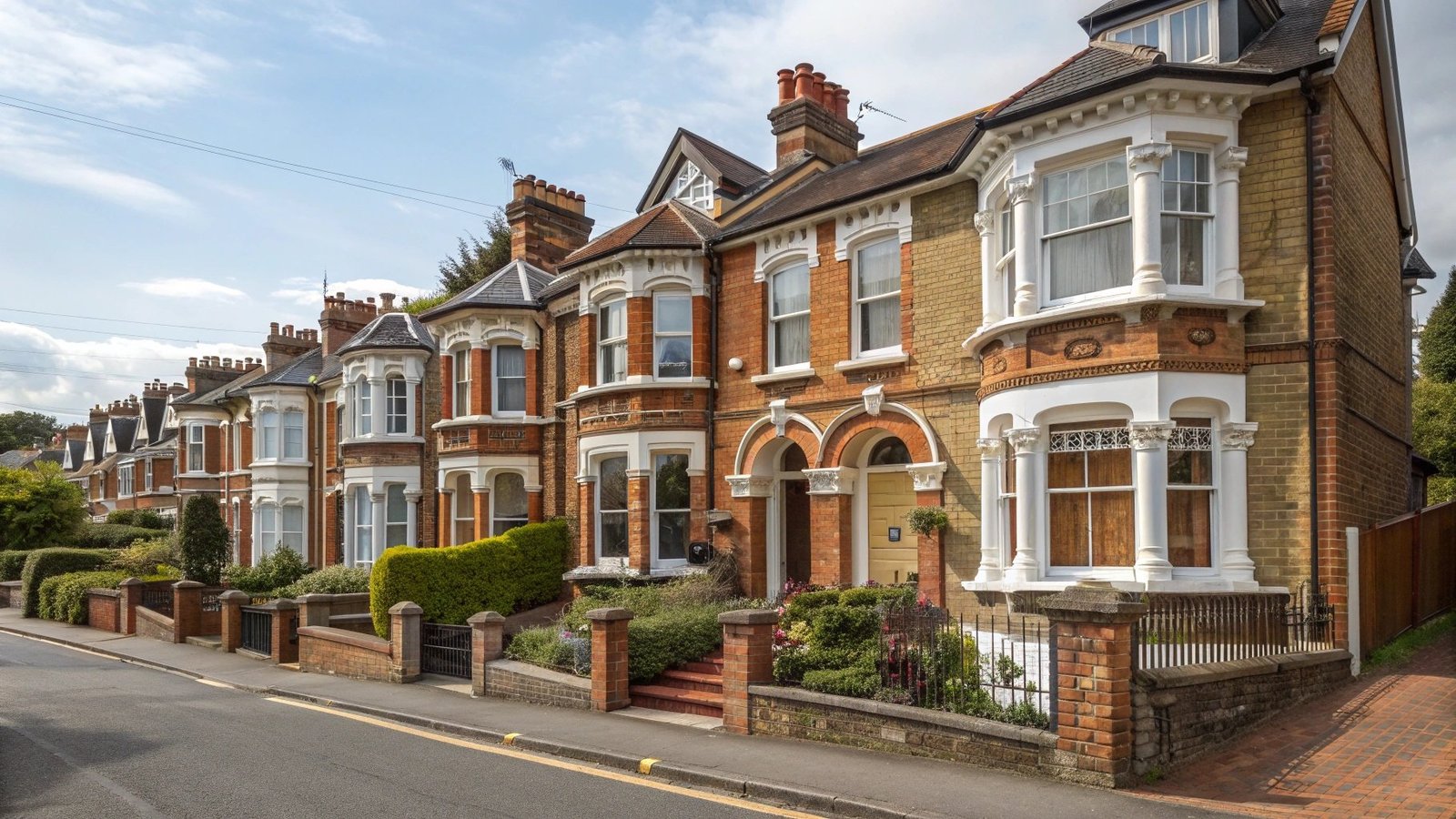
Period properties in Tunbridge Wells, particularly Victorian and Edwardian homes, require specialist surveying expertise due to unique construction methods, age-related defects, and conservation considerations. Professional surveys identify characteristic issues affecting older buildings while celebrating the architectural heritage that makes these properties so desirable.
Understanding Period Property Construction
Victorian and Edwardian properties throughout Tunbridge Wells were built using traditional construction methods vastly different from modern techniques. Understanding these historical building practices helps identify potential issues and appreciate why certain defects commonly occur in period homes.
Victorian Era Construction (1837-1901)
Victorian builders used solid brick walls typically 9 inches thick (one brick) for internal walls and 13 inches (brick-and-a-half) for external walls. Lime mortar provided flexibility allowing buildings to move slightly without cracking. Slate roofs with hand-cut tiles offered excellent longevity, while timber sash windows with single glazing provided ventilation. Suspended timber floors with air bricks allowed underfloor ventilation, and decorative plasterwork featured elaborate cornices and ceiling roses.
These construction methods created beautiful, characterful homes that, when properly maintained, last centuries. However, age-related deterioration and inappropriate modern repairs often cause problems requiring specialist attention.
Edwardian Era Construction (1901-1910)
Edwardian properties refined Victorian methods with slightly different characteristics. Bay windows became larger and more elaborate, Arts and Crafts influences appeared in detailing, room layouts became more practical with better natural light, and quality materials maintained high standards despite some cost-cutting in mass housing.
Tunbridge Wells boasts numerous fine Edwardian properties, particularly around Calverley Park and Mount Pleasant areas, representing the era's architectural quality and attention to detail.
Why Period Properties Need Specialist Surveys
Standard homebuyer surveys may miss critical issues in period properties because surveyors without specialist experience might not recognize traditional construction methods, understand how period buildings behave, or identify inappropriate modern alterations. Conservation area restrictions affect potential changes, and period features require specialized repair knowledge.
Our chartered surveyors specialize in period property surveys throughout Tunbridge Wells, understanding both construction heritage and modern building standards. We identify issues while respecting architectural significance, advising on sympathetic repairs that preserve character.
Common Issues in Victorian Properties
Movement and Settlement
Victorian properties commonly show historic movement cracks that stabilized decades ago. Distinguishing old settlement from active movement requires experience. Hairline cracks in predictable patterns usually indicate historic settlement, while fresh plaster cracks, doors and windows sticking, or widening gaps suggest ongoing issues requiring investigation.
Tunbridge Wells' clay soils can cause seasonal movement as ground moisture content changes. Tree roots extracting moisture during dry summers exacerbate movement in properties near large trees. Experienced surveyors assess whether movement is historic, seasonal, or progressive structural failure requiring remedial work.
Damp-Proof Course Failure
Victorian builders installed physical damp-proof courses using slate, engineering bricks, or bitumen felt between wall courses. After 100+ years, these deteriorate, allowing rising damp to penetrate walls. Modern cement pointing trapping moisture, raised external ground levels bridging damp-proof courses, and failed render allowing penetrating damp are common problems.
Surveys identify damp causes and recommend appropriate solutions. Modern chemical damp-proof courses often suit Victorian properties, though some conservationists prefer lime-based breathable approaches that work with traditional construction rather than against it.
Roof Deterioration
Original Victorian slate roofs last 100-150 years with good maintenance. Many Tunbridge Wells properties retain original roofs nearing the end of serviceable life. Slipped or missing slates, failed leadwork around chimneys and valleys, rotten timber sarking boards, deteriorated roof timbers from water ingress, and blocked or damaged cast iron gutters are typical issues.
Complete roof replacement costs £12,000-£25,000 depending on size and complexity. Surveys assess remaining roof life, advising whether immediate replacement is necessary or repairs will suffice for several more years.
Timber Decay and Infestation
Suspended timber floors, timber lintels over openings, and roof timbers are vulnerable to rot and woodworm. Wet rot occurs where timber stays damp, typically from plumbing leaks or rain penetration. Dry rot, the more serious fungal attack, spreads through masonry affecting large areas. Woodworm beetle larvae bore through timber, weakening structural members.
Surveys identify active infestations requiring specialist treatment versus historic attacks that won't progress. Ensuring adequate ventilation and keeping timber dry prevents most timber problems in Victorian properties.
Window Condition
Original timber sash windows add significant character and value to Victorian properties. However, after 100+ years, many suffer from rotten sills and frames, broken sash cords, missing or damaged glazing putty, layers of paint causing sticking, and single glazing causing heat loss and condensation.
Conservation areas often protect original windows, preventing uPVC replacements. Sensitive repairs maintain character while improving performance. Survey advice includes whether repair or replacement is appropriate given window condition and conservation restrictions.
Edwardian Property Specific Issues
Bay Window Problems
Elaborate Edwardian bay windows develop characteristic defects. Brick or stone bay foundations may settle differently from main building, causing cracks where they join. Lead roofs over bays deteriorate, allowing water ingress. Timber bay window frames rot from weather exposure and trapped moisture.
Repairing bay window issues costs £3,000-£8,000 depending on extent. Underpinning bay foundations adds significant expense. Surveys assess bay condition and identify necessary repairs.
Decorative Plasterwork
Edwardian properties feature ornate plasterwork including ceiling roses, cornicing, and decorative friezes. Water damage from roof leaks or burst pipes damages plaster. Inappropriate modern repairs using hard cement-based materials crack as buildings move naturally. Lost or damaged elements reduce character and value.
Specialist plasterers repair period plasterwork sympathetically, matching existing profiles and finishes. Surveys document plasterwork condition and recommend appropriate specialists when repairs are needed.
Assessing Period Features Value
Original period features significantly enhance property values in Tunbridge Wells' competitive market. Buyers pay premiums for authentically retained character, including original fireplaces and surrounds, decorative ceiling roses and cornicing, timber sash windows, stripped and restored floorboards, picture rails and dado rails, original doors with period ironmongery, and Victorian or Edwardian tiles.
Surveys identify surviving original features and assess their condition. Properties retaining more original character command higher values, while those with removed or damaged period features may need restoration to maximize appeal.
Modern Alterations Assessment
Many period properties have undergone alterations over decades. Some enhance properties while others damage character or create problems. Surveys assess alterations including removed chimney breasts potentially affecting structural stability, modern extensions respecting or clashing with original architecture, loft conversions done properly or creating issues, and damp-proof courses and cavity wall insulation potentially inappropriate for solid wall construction.
Inappropriate Modern Repairs
Well-meaning owners sometimes use unsuitable modern materials that cause long-term damage. Hard cement mortar pointing traps moisture in soft bricks, causing frost damage. Cement renders prevent walls breathing, forcing moisture inside. Non-breathable paints trap moisture in lime plaster. Modern cavity wall insulation in solid walls creates damp problems.
Experienced period property surveyors identify inappropriate repairs and advise on remedial work using traditional materials that work with Victorian construction methods.
Conservation Area Considerations
Many Tunbridge Wells period properties lie within conservation areas restricting alterations. Planning permission is required for changes to front elevations including windows, doors, roofing materials, and wall finishes. Demolishing or altering boundary walls and extensions or outbuildings need consent.
Surveys note conservation status and advise how restrictions might affect planned alterations. Working with conservation officers ensures changes preserve character while meeting modern needs.
Listed Building Complexities
Grade I, II*, and II listed buildings require listed building consent for most alterations. Listed status protects architectural and historical significance but complicates repairs and improvements. Even internal alterations, rewiring, replumbing, and heating system installations may need consent.
Specialist listed building surveyors understand consent requirements and advise on sympathetic approaches likely to gain approval. Listed building surveys are more detailed, documenting architectural significance alongside condition assessment.
Period Property Survey Costs
Specialist period property surveys cost more than standard surveys due to the expertise and time required. In Tunbridge Wells, expect to pay £800-£1,500 for Victorian or Edwardian property Building Surveys, £1,200-£2,500 for listed building surveys, and £1,500-£3,000 for large period properties with complex issues.
While expensive, specialist surveys prevent purchasing properties with hidden defects costing tens of thousands to repair. The investment protects you from unpleasant surprises after completion.
Maintaining Period Properties
Period properties need regular maintenance to prevent deterioration. Annual gutter clearing prevents water damage, five-yearly external decoration protects timber, regular roof inspections catch issues early, maintaining heating and ventilation prevents condensation, and addressing minor repairs promptly prevents escalation.
Surveys include maintenance advice helping you preserve your period property's condition and character for future generations.
Period Property Renovation Planning
If planning renovations, surveys provide essential information for project planning. Structural capacity for loft conversions, foundation depths for basement excavations, wall construction suitable for insulation, and services routing options inform renovation feasibility and costs.
Consulting surveyors early in renovation planning prevents expensive surprises and ensures sympathetic approaches preserving architectural integrity.
Energy Efficiency in Period Homes
Improving period property energy efficiency while preserving character requires careful approaches. Secondary glazing maintains original windows while reducing heat loss. Insulating solid walls needs breathable materials and specialist advice. Modern boilers and heating controls improve efficiency without altering appearance. LED lighting in period light fittings reduces consumption while maintaining aesthetics.
Surveys advise on appropriate energy improvements that don't damage historic fabric or character.
Insurance Considerations
Period properties need specialist insurance reflecting rebuild costs and traditional construction. Reinstatement values often exceed market values due to traditional material and craft costs. Specialist period property insurers understand unique risks and requirements.
Survey reinstatement valuations ensure adequate insurance coverage for your Victorian or Edwardian home.
Finding Period Property Specialists
Choose surveyors with demonstrated period property expertise. Look for RICS membership and conservation experience, familiarity with Tunbridge Wells properties and local issues, understanding of traditional construction methods, and appreciation of architectural heritage alongside practical advice.
Our team specializes in Victorian and Edwardian properties throughout Tunbridge Wells, providing surveys that protect your investment while celebrating architectural character.
Frequently Asked Questions
Are period properties more expensive to maintain?
Maintenance costs vary but period properties may need more frequent attention. However, traditional materials often last longer than modern equivalents when properly maintained. Budget for regular maintenance but appreciate longevity benefits.
Should I replace original features with modern equivalents?
Original features add value and character. Repair and restore where possible rather than replacing. Conservation areas may restrict replacements anyway. Modern materials often perform worse in period buildings than traditional elements.
Can I insulate solid Victorian walls?
Yes, but carefully. External insulation with breathable renders works well. Internal insulation needs vapor barriers and ventilation. Avoid cavity wall insulation—Victorian properties don't have cavities! Consult specialists for appropriate approaches.
How do I find out if my property is listed?
Check the National Heritage List for England online. Local planning departments also confirm listed status. Listed building designation documents detail protected features.
Are period property surveys always more expensive?
Specialist surveys cost more due to expertise required and detail needed. However, the investment prevents expensive mistakes and provides essential information for period property ownership.
Get Your Period Property Surveyed
If you're buying a Victorian or Edwardian property in Tunbridge Wells, our specialist surveyors provide comprehensive assessments protecting your investment. We understand period construction, identify characteristic issues, advise on appropriate repairs, and appreciate the architectural heritage that makes these properties special.
Contact us today to discuss your period property survey requirements. Our expertise ensures you purchase with confidence, knowing your beautiful period home's true condition.
Period Property Survey Specialists
Expert surveys for Victorian and Edwardian properties across Tunbridge Wells. Protect your investment in architectural heritage.
Book Period Property Survey